The scientific activity of the Ingénierie de Complexes Métalliques(InCoMe) team focuses on the design and synthesis of earth-abundant metals complexes for energy conversion to biological applications: dye sensitized solar cells (DSSC), photocatalysis, photodynamic therapy (PDT), antioxidant, anti inflammatory, anti infectious…
The InCoMe team’s project is therefore fully embedded in this challenge, with a primary focus on modulating metal–ligand interactions. This is achieved through a comprehensive methodology involving control of the nature of the coordinating units, the coordination mode, the degree of conjugation, and the functionalization of the complex periphery. By combining original molecules with coordination chemistry, we aim to rationally tune the properties of the coordination sphere of these complexes in order to establish structure–property relationships that are essential for progress in the field.
Photoactive Fe(II) Complexes for DSSCs
Researchers: Dr. Philippe Pierrat, Pr. Corinne Comoy, Dr. Nour Shalhoub (PhD 2022-2025), Johanne Coutard (PhD student, 2024-2027).
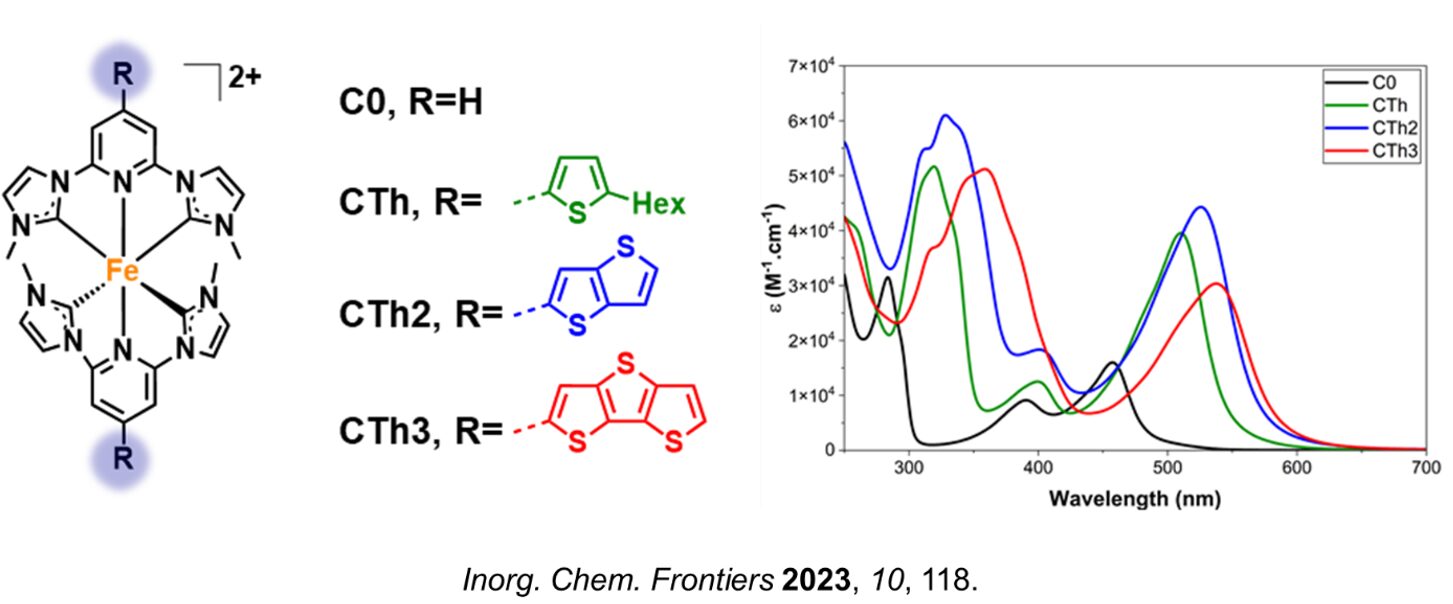
We investigate iron(II) complexes with pyridyl N-heterocyclic carbene ligands to understand how extending the ligands with thiophene units controls their electronic structure and excited-state dynamics. By combining synthesis, theory, and ultrafast spectroscopy, we show that thiophene substitution induces strong HOMO mixing, red-shifts metal-to-ligand charge-transfer transitions, enhances light absorption, and nearly doubles excited-state lifetimes through MLCT delocalization. This work is enabled by close collaborations with Dr. Mariachiara Pastore at LPCT (Université de Lorraine) for advanced electronic-structure calculations and with Prof. Stefan Haacke at ICPMS (Université de Strasbourg) for femtosecond transient absorption measurements of excited-state lifetimes.
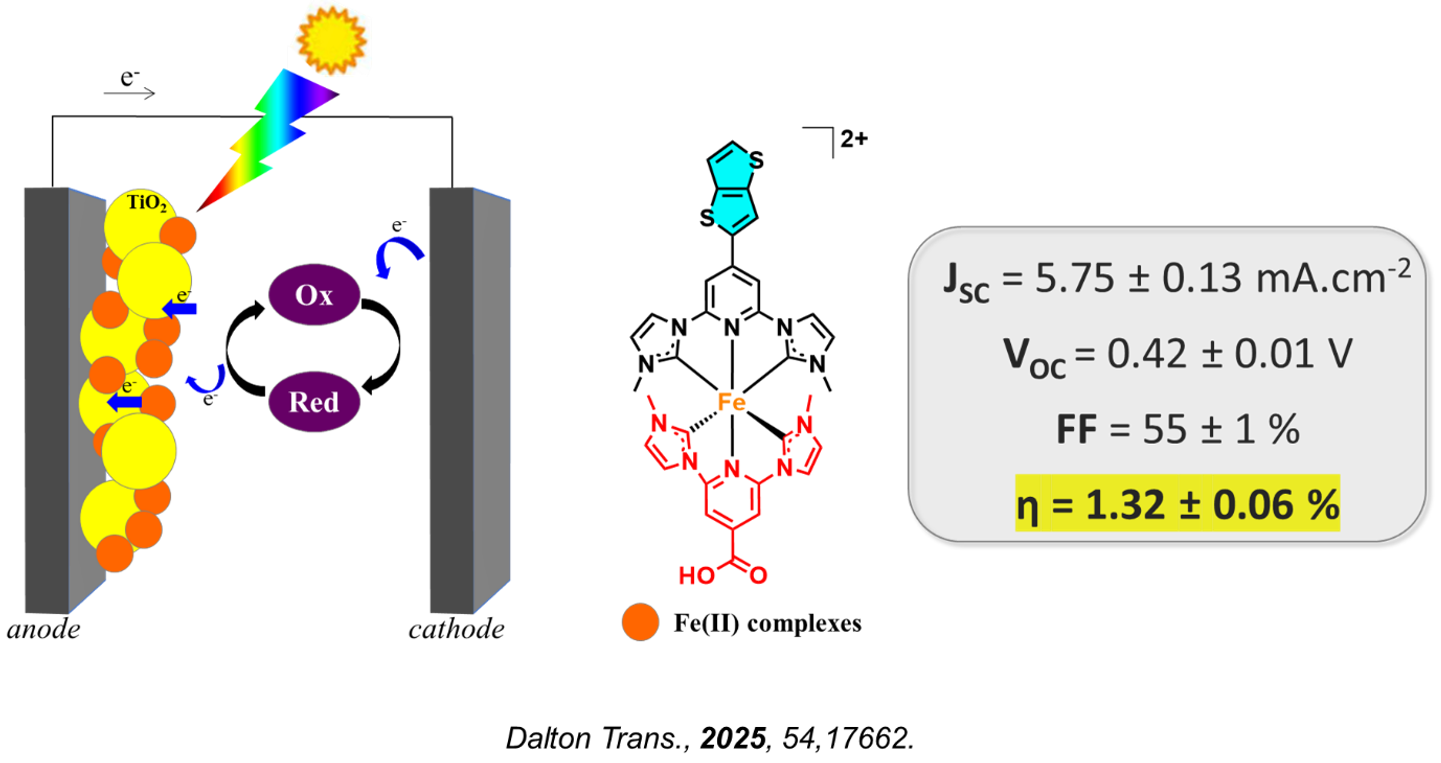
Our team develops iron(II)–NHC photosensitizers for dye-sensitized solar cells, combining molecular design with spectroscopy, electrochemistry, and theory to understand structure–function relationships. By tailoring thiophene-rich ligands and anchoring groups, we achieve broad, panchromatic light absorption while revealing a critical trade-off between light harvesting and interfacial charge injection at TiO₂. This work, carried out in collaboration with Prof. Stefano Caramori’s group at the University of Ferrara, provides design guidelines for advancing iron-based sensitizers as sustainable alternatives to precious-metal dyes.
Photoactive Metal Macrocycles as Next-Generation Anti-Infectives
Researchers: Dr. Florence Dumarçay, Dr. Mihayl Varbanov, Dr. Hiba Hussein (2018-2022), Tristan Hergot (PhD, 2023-2026), Dr. Vincent Gaumerd (Posdoctoral researcher 2025-2026).
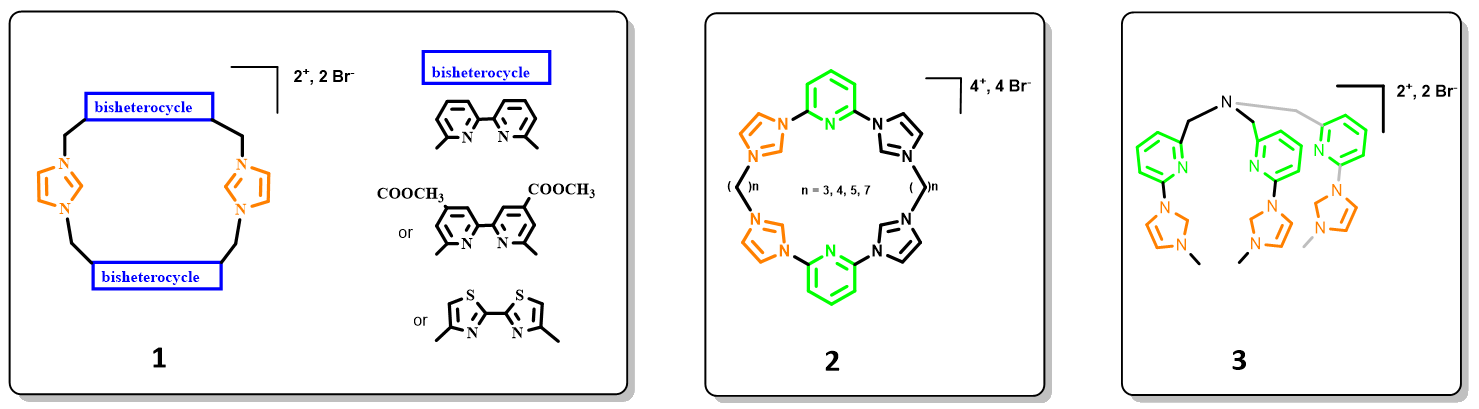
The rigidity of the coordination sphere is a key factor controlling the photophysical behavior of metal complexes, as it limits vibronic coupling and slows non-radiative deactivation from MLCT to MC states. Building on our expertise in supramolecular ligand synthesis, we have developed three original families of proligands with tailored rigidity and functionality. The first family (1) consists of macro-bis-heterocyclic bis-imidazolium ligands and related pincers, some of which display remarkable photophysical and biological properties, including highly efficient singlet oxygen generation for photodynamic therapy. The second family (2) comprises symmetric tetra-imidazolium bis-heterocycles, with lead compounds showing promising fluorescence-based theragnostic potential and antimicrobial activity. Finally, the third family (3) consists of tripodal ligands anchored to a central amine platform displaying promising coordination features.
Beyond ligand and complex design (under current investigations), this research axis places also strong emphasis on the biological evaluation of photoactive systems for antiviral and antibacterial applications. Within the team, we investigate photoinduced activities against clinically relevant pathogens involved in persistent and multidrug-resistant infections, including respiratory viruses and bacteria such as influenza viruses, coronaviruses, Staphylococcus aureus, and Pseudomonas aeruginosa. Several proligands and their metal-based assemblies exhibit intrinsic photophysical and biological properties, notably efficient singlet oxygen generation, enabling localized oxidative stress for photodynamic inactivation of infectious reservoirs. Advanced compounds have demonstrated photoinduced antiviral and antibacterial activity, with mechanistic insights supported by electron microscopy and molecular modelling. Ongoing developments extend toward supramolecular platforms designed for combined photodynamic and photothermal therapies, positioning the team at the interface of chemistry, photophysics, and translational antimicrobial research
Researchers: Dr. Sabrina Touchet, Dr. Mihayl Varbanov.
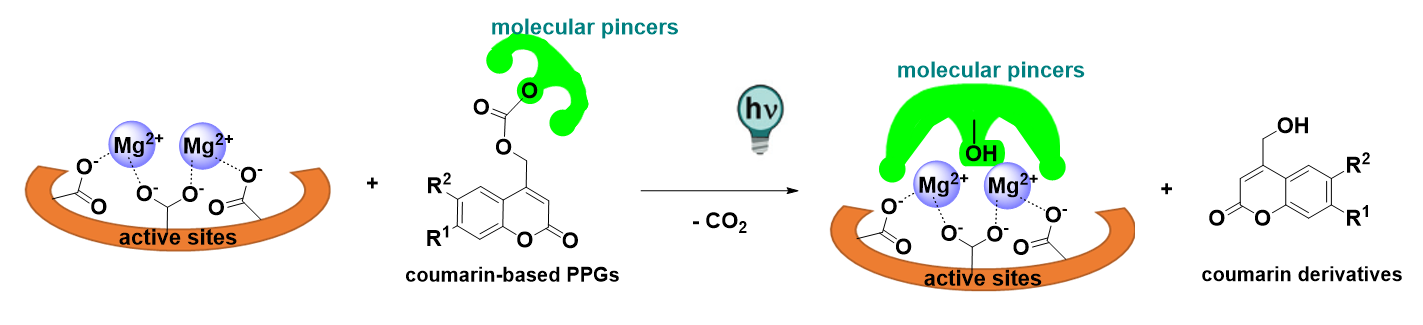
This project focuses on the rational design and synthesis of novel « molecular pincers » specifically engineered to chelate the two Mg2+ ions essential for viral metalloenzyme catalysis. By incorporating specific electron-donating and accepting groups to maximize binding affinity and metal coordination within the conserved active sites of herpesviruses, these molecules aim to block human herpesvirus replication and reactivation. To improve selectivity and reduce off-target effects, photoremovable protecting groups (PPGs) will be incorporated, allowing for the light-triggered release of the active chelators.
Metal-Chelating Peptides
Researchers: Dr. Katalin Selmeczi, Tessa Van Der Oost (PhD student, 2024-2027).
In the context of the bioeconomy, agri-food co-products such as fish by-products or sunflower meals represent valuable protein resources for the production of bioactive peptides. Some protein hydrolysates contain metal chelating peptides (MCPs) with promising functional properties, but their screening remains costly and time-consuming. This project aims to develop and experimentally validate a bioinformatic tool for the in silico discovery of metal-chelating peptides, in collaboration with Dr. Laetitia Canabady-Rochelle senior research scientist at CNRS (HDR; LRGP, UL) and implication of Dr. Roda Bounaceur,senior research engineer at CNRS (HDR; LRGP, UL) for code implementation.
Philippe GROS, DR CNRS (… – 2025) Nour SHALHOUB, PhD (2022-2025) Salwa Simona JAMIL, Post-doctorant (2024-2025)
Master 2 students : Mouhamed NGOM, Vincent MARIANI, Mélaine WANG, Hannah KÜNSTEK, Walaa REDA
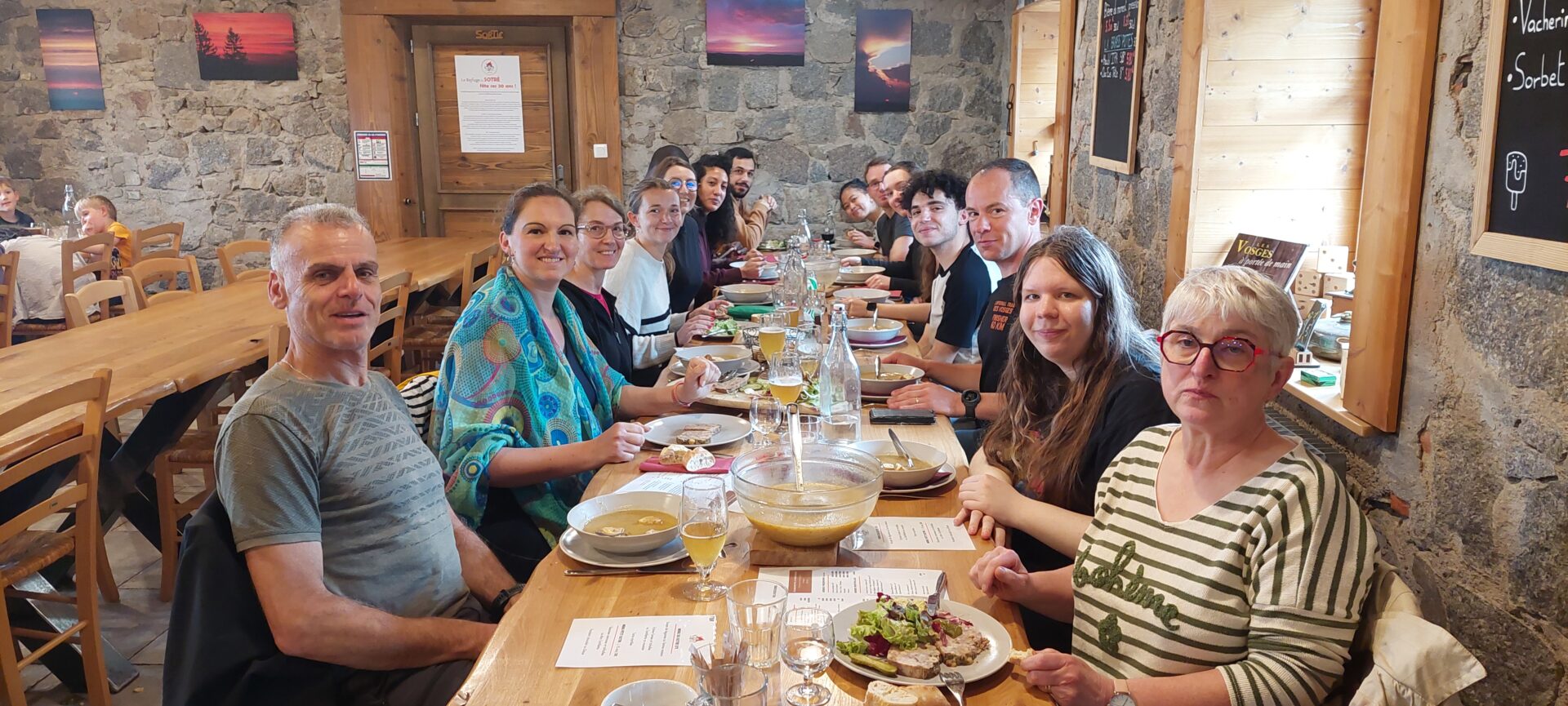
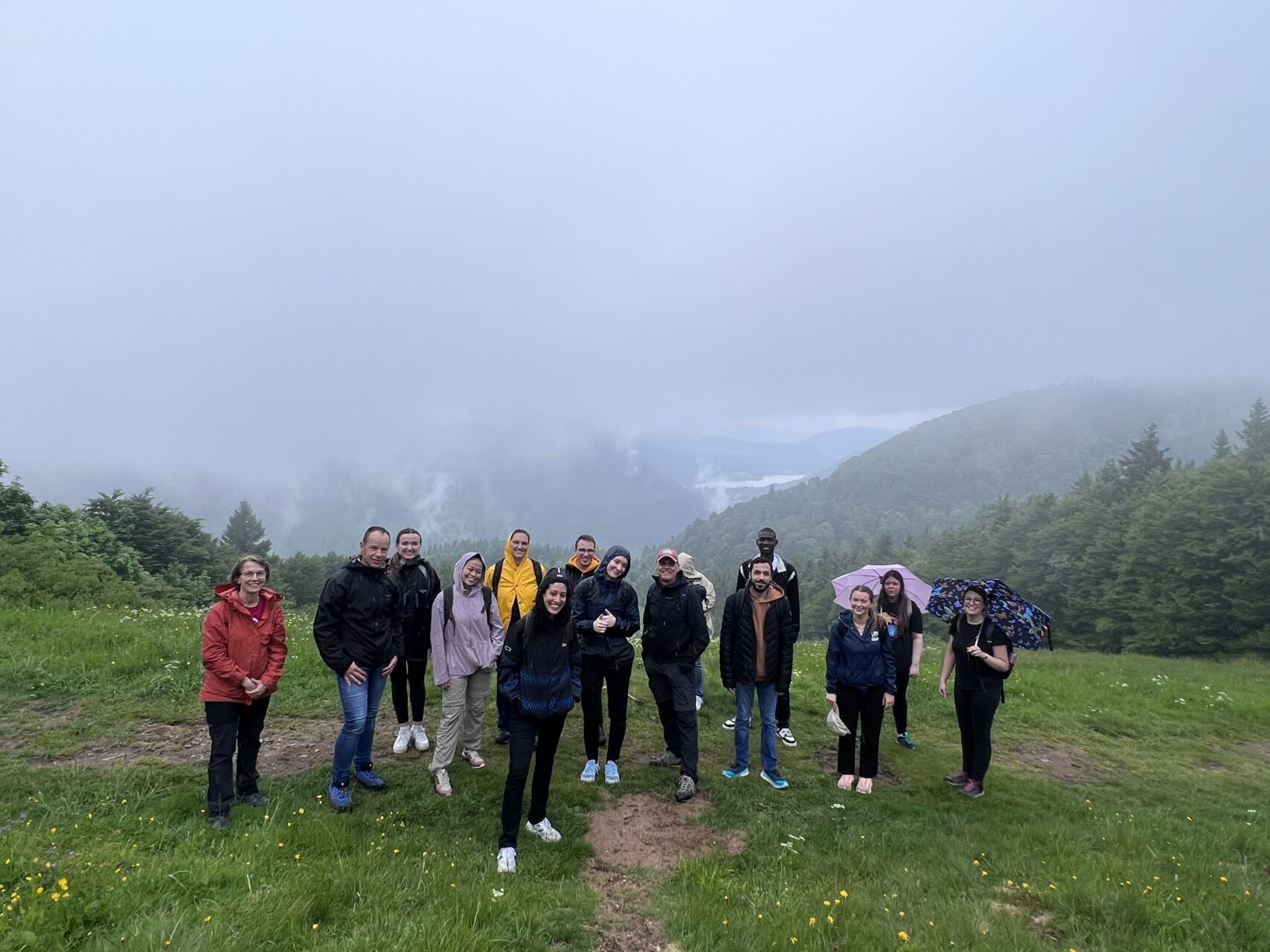
Team building
Hiking in the High Vosges, spotting chamois, and enjoying a great restaurant: an outstanding team-building day !
Gérer le consentement
Pour offrir les meilleures expériences, nous utilisons des technologies telles que les cookies pour stocker et/ou accéder aux informations des appareils. Le fait de consentir à ces technologies nous permettra de traiter des données telles que le comportement de navigation ou les ID uniques sur ce site. Le fait de ne pas consentir ou de retirer son consentement peut avoir un effet négatif sur certaines caractéristiques et fonctions.
Fonctionnel Toujours activé
L’accès ou le stockage technique est strictement nécessaire dans la finalité d’intérêt légitime de permettre l’utilisation d’un service spécifique explicitement demandé par l’abonné ou l’utilisateur, ou dans le seul but d’effectuer la transmission d’une communication sur un réseau de communications électroniques.
Préférences
L’accès ou le stockage technique est nécessaire dans la finalité d’intérêt légitime de stocker des préférences qui ne sont pas demandées par l’abonné ou l’internaute.
Statistiques
Le stockage ou l’accès technique qui est utilisé exclusivement à des fins statistiques.Le stockage ou l’accès technique qui est utilisé exclusivement dans des finalités statistiques anonymes. En l’absence d’une assignation à comparaître, d’une conformité volontaire de la part de votre fournisseur d’accès à internet ou d’enregistrements supplémentaires provenant d’une tierce partie, les informations stockées ou extraites à cette seule fin ne peuvent généralement pas être utilisées pour vous identifier.
Marketing
L’accès ou le stockage technique est nécessaire pour créer des profils d’internautes afin d’envoyer des publicités, ou pour suivre l’utilisateur sur un site web ou sur plusieurs sites web ayant des finalités marketing similaires.